What is Vision Zero?

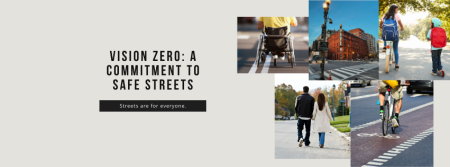
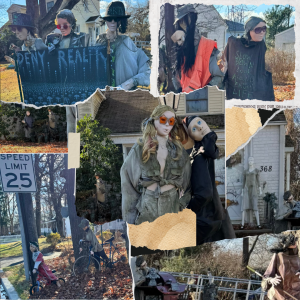
Vision Zero: A Commitment to Safe Streets and includes images of people walking, biking, scooting and using a wheelchair on roads.

You’ve probably heard a lot about Vision Zero and you’re wondering what is it? Municipalities across New Jersey and the United States are committing to Vision Zero through resolutions, ordinances aimed at increasing road safety, and street redesigns that accommodate all people, regardless of how they get around.

What is Vision Zero? A Bold Strategy for Road Safety

In the world of transportation and road safety, Vision Zero has emerged as a groundbreaking approach aimed at eliminating traffic-related fatalities and serious injuries. While the idea might seem idealistic at first, it’s grounded in the belief that no loss of life or serious injury on the roads is acceptable. By shifting the focus to proactive safety measures, Vision Zero aims to create a road system that protects all users, including drivers, pedestrians, cyclists, and motorcyclists.

Origins of Vision Zero

Vision Zero was first introduced in Sweden in 1997. The country, known for its strong commitment to social welfare and public safety, set out with the goal of creating a transportation system where nobody would be killed or seriously injured in road accidents. Since its inception, Sweden has seen significant success, with traffic fatalities dropping by over half in the years that followed the implementation of Vision Zero.

Seeing these positive results, the idea began to spread globally. Today, cities and countries around the world have adopted Vision Zero as part of their road safety strategies, including major urban centers in the U.S., Canada, Europe, and beyond. But Vision Zero isn’t just a set of guidelines—it’s a call to action and a comprehensive approach to how we think about traffic safety.

Key Principles of Vision Zero

  • Human-Centered Design: One of the core tenets of Vision Zero is the recognition that humans make mistakes. Road design should accommodate human error, making it difficult for accidents to result in serious injuries or deaths. For example, roundabouts or protected bike lanes can reduce the likelihood of fatal collisions.
  • Systemic Safety: Vision Zero doesn’t just focus on individual behavior but emphasizes improving the entire transportation system. This includes engineering safer roadways, introducing more robust vehicle safety standards, and enhancing traffic laws. The goal is to redesign roads and infrastructure to prevent severe accidents from occurring, regardless of human error.
  • Shared Responsibility: Unlike traditional road safety approaches, which often place the blame for accidents on drivers, Vision Zero emphasizes that responsibility is shared by everyone involved—drivers, cyclists, pedestrians, policymakers, and engineers. It’s not about blaming individuals but creating a safer system for all.
  • Data-Driven Solutions: Effective policies and infrastructure changes must be informed by solid data. Vision Zero calls for detailed data collection on traffic accidents, injury patterns, and the behavior of road users to determine where improvements are needed. This allows for targeted solutions and better resource allocation.

Vision Zero in Practice

While Vision Zero might sound like an ambitious ideal, there are numerous real-world examples showing its effectiveness. Cities around the world have already begun to implement Vision Zero strategies with significant success.

  • Hoboken, NJ: Since committing to Vision Zero in 2018, Hoboken has not seen a traffic fatality in seven years, thanks to safety improvements that include daylighting intersections – the process of increasing visibility at crosswalks, incorporating bike lanes, and reducing speed limits throughout the city.
  • Jersey City, NJ: Jersey City became the first city in New Jersey to commit to Vision Zero through initiatives like pop-up pedestrian plazas, installing roundabouts, reducing speed limits, and daylighting intersections.
  • New York City: In 2014, NYC adopted Vision Zero as part of its official traffic safety strategy. The city implemented measures like lower speed limits, the expansion of bike lanes, and increased enforcement of traffic laws.

As more cities adopt Vision Zero principles, it’s becoming clear that road safety is not just about enforcement but about rethinking the very nature of how we design and interact with our road systems. The initiative has the potential to transform cities into safer, more inclusive environments where everyone—from children to the elderly—can move around confidently without the constant threat of road crashes.

Vision Zero is A Shared Goal

Achieving zero traffic deaths and serious injuries requires continued collaboration among government agencies, engineers, public health professionals, and the public. Everyone must play a role in ensuring that Vision Zero is more than just a lofty goal but a tangible, life-saving reality.

Vision Zero is more than just a traffic safety program; it is a philosophy that redefines how we view road safety. It challenges the notion that traffic deaths are inevitable and calls for systemic changes to create a safer world for all road users. The journey toward zero is long, but it’s a step toward a future where no one has to fear for their life on the road.

Learn more about Vision Zero, download a sample resolution, and take the Vision Zero Pledge HERE.

New Jersey Safe Passing Law


Happy 2024! A new year brings with it new possibilities, like the opportunity to reduce crash fatalities on our roadways. According to the 2023 NJ State Police Fatal Crash Statistics  172 pedestrians and 23 cyclists were killed on New Jersey’s roadways last year. That means 195 families were left with at least one empty seat at their holiday gatherings due to these preventable deaths.

The New Jersey Safe Passing law, also called Oscar’s Law after Oscar Zanoni, a 44 year old Metuchen resident that was fatally killed by a tractor trailer on Rt. 27 in Edison, went into effect on March 1, 2022. The law aims to prevent injuries and fatalities caused by motor vehicle crashes with bicyclists, pedestrians, and other road users. This year, we are asking all motorists to help keep everyone safe by following these common sense rules:


  • Drivers must move over a lane (if there’s one to move into) while following all current no-passing and no speeding laws.
  • On a single-lane road, drivers must provide a distance of at least 4 feet to safely pass a vulnerable road user.
  • If 4 feet is not possible, drivers must slow to 25 mph and be prepared to stop until they can pass safely without endangering those sharing the road.


Drivers who are caught violating the law will receive a $100 fine (causing bodily injury results in a $500 fine and 2 motor vehicle points).

You can hear the story of how the NJ Safe Passing law was implemented, by checking out our Mobility Matters podcast interview with Metuchen Borough Council President, Jason Delia.

Together we can make 2024 the safest year ever for pedestrians, cyclists, and all road users!


Additional resource and information about the NJ Safe Passing Law can be found at the following links:

NJ Statute 39:4-92.4

NJ Division of Highway Traffic Safety

NJ Bicycle Pedestrian Resource Center at Rutgers University

NJ Bike Walk Coalition

Metuchen Man’s Death Spurs Pedestrian Safety Legislation


Creating a Safety Town


In 2020, Keep Middlesex Moving was awarded funding from the New Jersey Division of Highway Traffic Safety (HTS) to lead an exploratory committee charged with developing a Safety Town Program in the Township of East Brunswick.  Made up of Mayor-appointed residents and stakeholders, KMM’s mission was to formulate a plan for Safety Town within the municipality including the location, size, and scope of the project.

Safety Town is a program designed to teach pre-K children pedestrian and bike safety, crosswalk safety, and more. Using a designated location, Safety Towns are created to mimic a neighborhood or downtown complete with miniature buildings, roadways, and crosswalks.  In this space, children can safely learn about the rules of the road both on foot and while riding their bicycles.

Over the course of the project, the committee reviewed crash data, township safety concerns, and location options for the program.  Given the restrictions imposed by Covid-19 protocols, many of these meetings took place via zoom to ensure everyone’s safety.  After months of review, committee members adopted a solid, scalable plan. It included important amenities like crosswalks, an intersection with traffic lights, and double yellow lines. Throughout the course, structures representing the library, police department, fire department, post office, and the municipal building would be strategically placed on “the street.” This provides the opportunity to solicit sponsorships and offer naming rights to local businesses and organizations.  The committee felt this course could be implemented more quickly and easily than a larger plan that might not be realized for some time. Each member of the committee felt strongly that a safety town program is integral to the health and wellbeing of the residents in East Brunswick and the greater community.

The project will next be presented to the East Brunswick Township Council for adoption.  To learn more about this project or to learn more about implementing a similar program in your town, please reach out to aholt@kmm.org.

Winter Driving Safety Tips – Don’t get Stuck in the Cold!


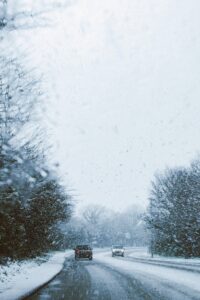
Old Man Winter has arrived and if you haven’t done so already, we recommend brushing up on your winter driving skills as well as your winter driving readiness.

Driving in Bad Weather

Carpool: two heads are better than one.
• Be alert. Don’t drive when fatigued.
• Allow plenty of extra time for trips.
• Have alternative routes for how you’ll drive from point A to point B. Anticipate worst-case scenarios and prepare for them.
• Make sure your cell phone is fully charged and have the charger handy.

Tips for Readying Your Car

• Keep the gas tank at least half-full when driving in bad weather. You’ll be more prepared for periods of slow driving or when traffic stops altogether.
• Keep your wiper blades in excellent condition to ensure good visibility.
• Make sure your tires have good treads.
Carry emergency supplies in your vehicle, no matter what the weather. A good emergency checklist includes a blanket, window scraper, flashlight, first-aid kit, shovel, jumper cables, flares, and non-perishable snacks.

Braking and Skidding

• When applying the brakes on a vehicle equipped with conventional brakes, avoid locking them by pumping.
• For vehicles equipped with anti-lock brakes, apply the amount of brake pressure needed and don’t pump the brakes.
• To avoid skidding, stay within the speed limit, and, in poor weather, slow down. Keep adequate distance between your vehicle and others.
• Slow down before entering turns or bends, steering steadily.
• While on icy or slippery roads, don’t brake heavily or jerk the steering wheel.

Snow, Ice, or Mud Conditions

• If your car is stuck in snow, ice, or mud, proceed carefully. Acceleration that is too rapid will spin the wheels and only dig the vehicle in deeper.
• Try to stay calm and turn the steering wheel gently from side to side to clear snow, ice, or mud away from the wheels. Lightly accelerate forward with the wheels straight ahead, alternating with a slow movement in reverse. This may help rock the vehicle out of its rut.
• Be aware that moisture on overpasses and bridges becomes icy more quickly than on ground-level roads since cold air is beneath these structures.

This is the perfect time of year to investigate ridesharing or mass transit as an alternative for your commute. Contact KMM to inquire about carpool or vanpool matches for your route, and get free mass transit schedules for your area. Why not start commute habits now that will benefit you all year long? It could make for a better commute!

Winter Magic – Hiking, Biking, and Walking

Nature doesn’t stop when it gets cold outside and neither should you. This Winter, bundle up and get outdoors this winter to discover what Middlesex County has to offer.
We hope you use this guide as a blueprint or inspiration to explore.

MIDDLESEX COUNTY HAS…
Hiking – 6,300 acres of parks and conservation areas, perfect for hiking at any skill level
Biking- Cruise through historic towns, picturesque farmland, or urban greenways
Birdwatching- Over 300 species of birds, including some very rare migratory birds
Fishing- Enjoy year-round fresh or saltwater fishing spots
Snow Sports- If the weather permits, try cross-country skiing or snowshoeing
Art Tour- From vibrant murals to unique sculptures, check out our outdoor art
History Tour- Enjoy the new walkable history tour to see landmarks in New Brunswick, Highland Park and Piscataway
Don’t forget to take photos and tag #discoverMiddlesex.

For a complete guide, click on the link below

https://discovermiddlesex.com/wp-content/uploads/2021/01/outdoorGuide-Winter-2021-v4-compressed.pdf


Post pulled from Discover Middlesex.

Go Take A Hike on National #TakeAHike Day!

Hiking is a great outdoor activity delivering benefits beyond scenic and fun. Unlike regular walking, hiking involves much more. Here are some safety tips to cover before you go out for your hike.

  1. Check the weather. Leading up to and a few hours before your hike, check the weather. The weather, especially this time of year, isn’t always predictable. It’s better to be aware and prepared instead of being surprised while on your hike.
  2. Pack the essentials. Nothing is worse than being on your hike and not being prepared for emergency situations. Some key essentials to have with you at all times are a map/compass, sunscreen, extra clothing, cell phone, water, and food.
  3. Wear the right clothing. Painful feet can ruin any hike. Invest in high-quality hiking shoes and thick socks. Wearing layers is the best way to be prepared. You can always take them off and put them back on when needed.
  4. Know where you’re going. Before heading on your hike, make sure that you and whoever else is going are aware of where you are going. Showing up for hiking and not knowing where to go can lead to an unsuccessful hike. Go over the trail and/or trails that you will be covering that day, that way you can be safe and enjoy the experience.

Not sure where to go?  Here are some of our staff’s favorite places to Hike!

World Day of Remembrance for Road Traffic Victims (WDR)

The World Day of Remembrance for Road Traffic Victims (WDR) is commemorated on the third Sunday of November each year.

It is a high-profile global event to remember the many millions who have been killed and seriously injured on the world’s roads and to acknowledge the suffering of all affected victims, families, and communities – millions added each year to countless millions already suffering: a truly tremendous cumulative toll.

This Day has also become an important tool for governments and all those whose work involves crash prevention or response to the aftermath of crashes since it offers the opportunity to demonstrate the enormous scale and impact of road deaths and injuries, call for an end to the often trivial and inappropriate response to road death and injury and advocate for urgent concerted action to stop the carnage.

On World Day we too pay tribute to the dedicated emergency crews, police, and medical professionals, who deal daily with the traumatic aftermath of road crashes.


Source: https://worlddayofremembrance.org/#info

Halloween Safety Tips

The ghosts, monsters and other creatures walking the streets on Oct. 31 aren’t the most frightful thing about Halloween. Here’s a scary fact: Halloween is the most dangerous night of the year for children walking on roadways across the country.

Children are more than twice as likely to be hit by a car and killed on Halloween than any other night of the year, according to the National Highway Traffic Safety Administration. And the Centers for Disease Control and Prevention found that children are four times more likely to be hit by a vehicle on Halloween. That makes following safe pedestrian and driver practices all the more important as children set out to trick or treat this year.

For Pedestrians

• Make sure costumes don’t impair your child’s ability to walk or see. KidsHealth.org warns against wearing masks that can limit visibility.

• Before crossing look left, right, and then left again.

• Use sidewalks. When there are no sidewalks, walk-facing traffic.

• Be visible. The Safe Kids Worldwide campaign suggests adding reflective tape to costumes or having children carry a light or glow stick. A survey by the group found that only 18 percent of parents have their children use safety lighting on Halloween.

• Cross at corners and intersections and use marked crosswalks when possible.

For Drivers

• Obey the speed limit. AAA suggests driving 5 mph below the posted speed limit on Halloween.

• Stop for pedestrians. New Jersey law requires motorists to stop for pedestrians in cross-walks. Violations of the law carry a $200 fine and two points on your license.

• Don’t drive distracted. New Jersey prohibits talking and texting while driving. Fines range from $200 for first-time offenders to as much as $800 for repeat offenders.


Everyone is a Pedestrian – October is Pedestrian Safety Month

More than 6 in 10 people walk for transportation, exercise, relaxation, or other activities. The benefits of walking extend beyond personal and physical, to environmental benefits that can lead to healthier, quieter, cleaner, and safer streets. Walking can also improve local economies and enhance social and community engagement, leading to more vibrant, resilient, and livable spaces.

Unfortunately, in 2019 there were 6,205 pedestrians killed and 76,000 injured in traffic crashes. On average, a pedestrian was killed every 85 minutes and injured every 7 minutes in 2019. Please use these materials to increase awareness about how we can combat pedestrian crashes in our communities.

To learn more or to implement a pedestrian safety program, please contact our offices at programs@kmm.org


Shared from NHTSA

Car Free Day ~ Reimagined!

This year, along with Greater Mercer TMA, we are celebrating Car Free Day Reimagined.  In response to COVID-19, many of us have already made changes to our daily commutes.  More folks are walking and biking and many are working on a hybrid schedule.  So this year, we celebrate Car Free and all the changes commuters have made this year.

Over the past 18 months and as a result of going #CarFree, we have seen an increased awareness of walking and cycling infrastructure across both Middlesex & Mercer Counties.  We also experienced better air quality and a high focus on our health and well-being.  Best of all, we find commuters are exploring and supporting their local businesses as a result of the commute change.

As we move ahead, we hope that commuters will maintain a part of their “new commute” methods.  We have witnessed that even the smallest change can make a significant impact.  So this week, we encourage everyone to share how they are commuting to work.

🚙Carpool or Vanpool – snap a photo with your partners!
🚍Take an NJ TRANSIT bus or train – snap a photo of your favorite spot along the commute!
🚲Riding your bike or walking to work or school – share with us how many miles you biked or walked!
💻Are you still working from home? Share with us a photo of your workspace or what you like most about working from home!
You’ve Reimagined your city car-free! 🌳♥️🌎  Let’s keep that going strong.
Email photos to cfowler@kmm.org or tag us #goCarFreeNJ on social media.  Also, take the pledge!